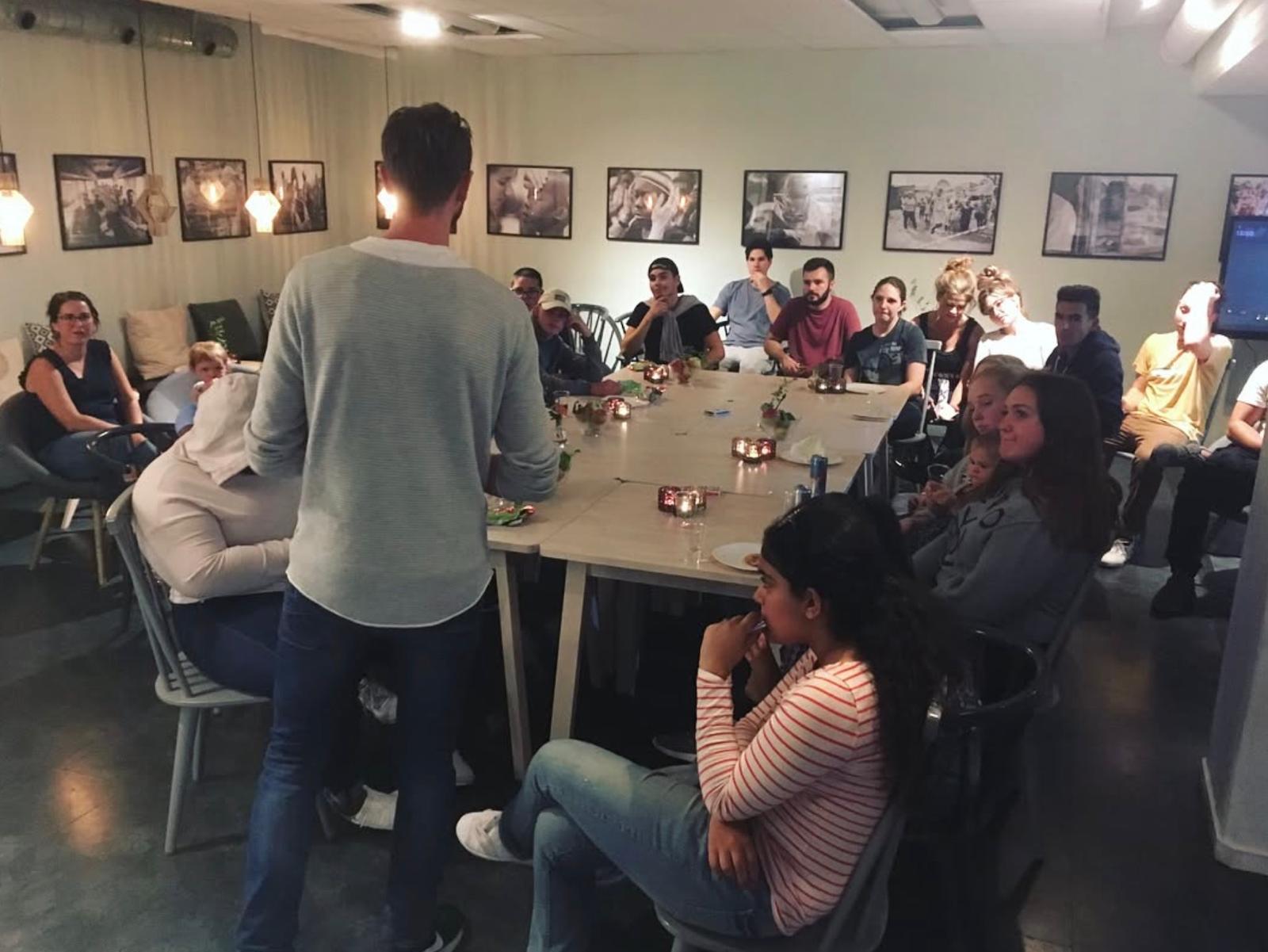
In February, Union De Citoyens Actifs (UCA) organized a local youth activity in Blanc-Mesnil, Île-de-France. The activity brought together young people in an informal discussion setting to explore how environmental issues, especially water use, water scarcity, and access to natural resources, are understood at local level by youth.
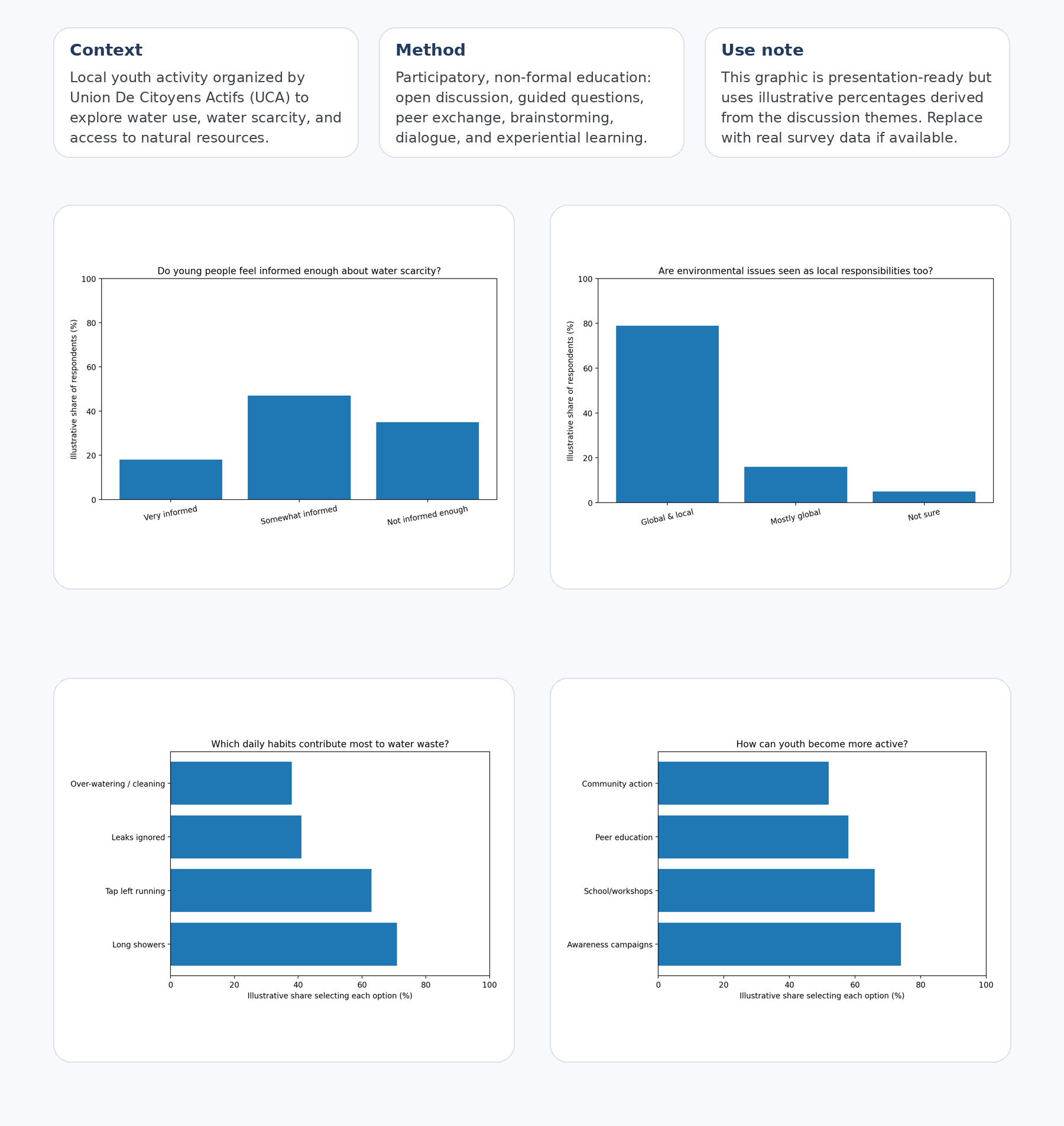
The objective of this local meeting was simple and practical: to give young people space to speak, reflect, and respond to key questions that are at the heart of the project. In line with the preparation approach, participants were invited to share whether they had seen problems linked to water scarcity or environmental pressure in their own surroundings, how aware they feel about responsible water use, and what kind of solutions they believe young people can promote in daily life and in their communities. The project application foresees exactly this kind of preparatory questioning, including asking applicants whether they face issues with water scarcity or access to natural resources in their region, and assessing participants’ existing knowledge about water usage and environmental issues through a survey.
Rather than using a formal lecture format, UCA chose a participatory, non-formal education method, with open discussion around one table, guided questions, mutual dialogue, and peer exchange. This approach is strongly aligned with the right methodology, which highlights interactive and collaborative learning methods such as brainstorming, question-and-answer, dialogue, experiential learning, and active participation.
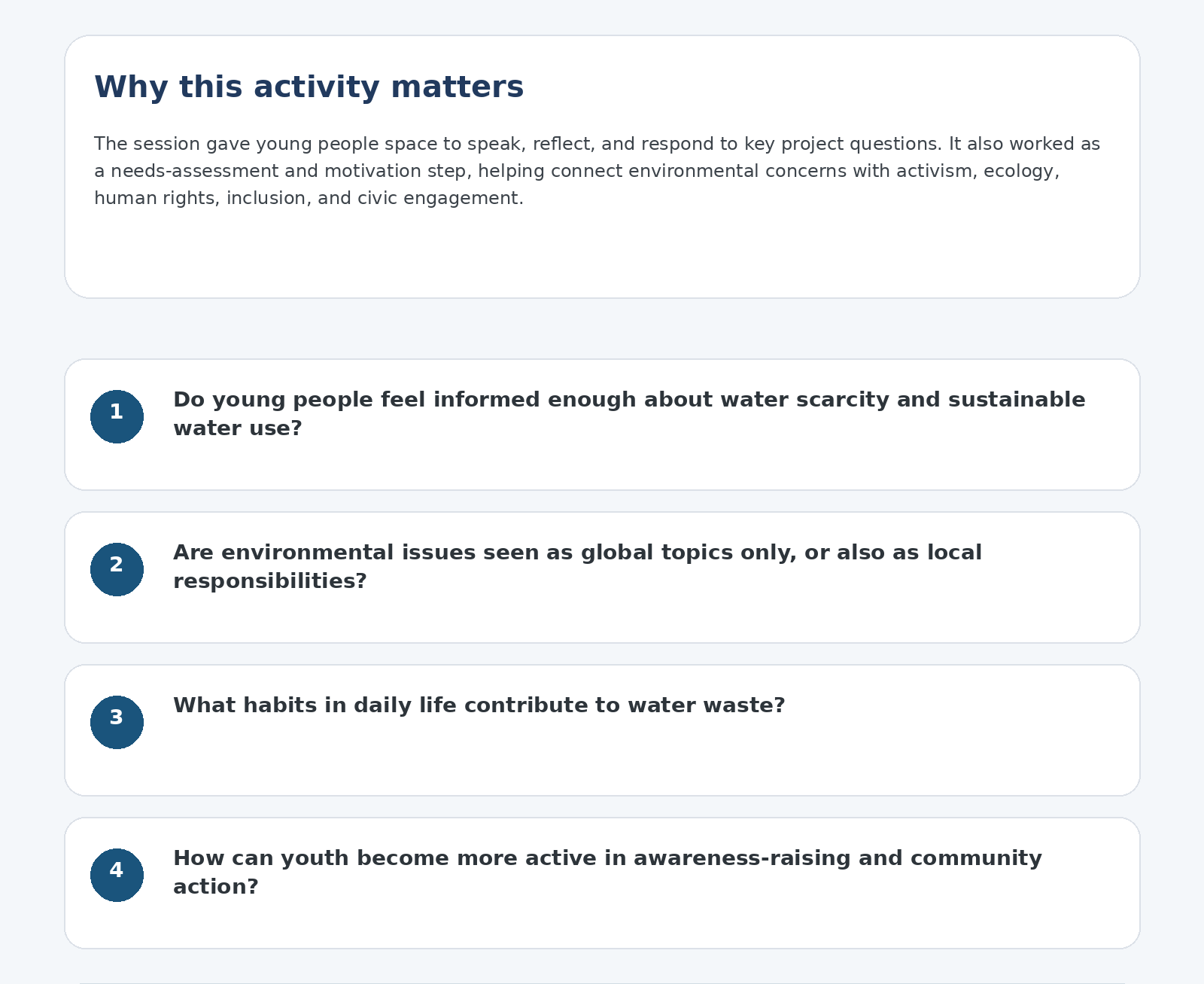
During the session, the young participants were encouraged to respond to practical questions such as:
-
Do young people feel informed enough about water scarcity and sustainable water use?
-
Are environmental issues seen as global topics only, or also as local responsibilities?
-
What habits in daily life contribute to water waste?
-
How can youth become more active in awareness-raising and community action?
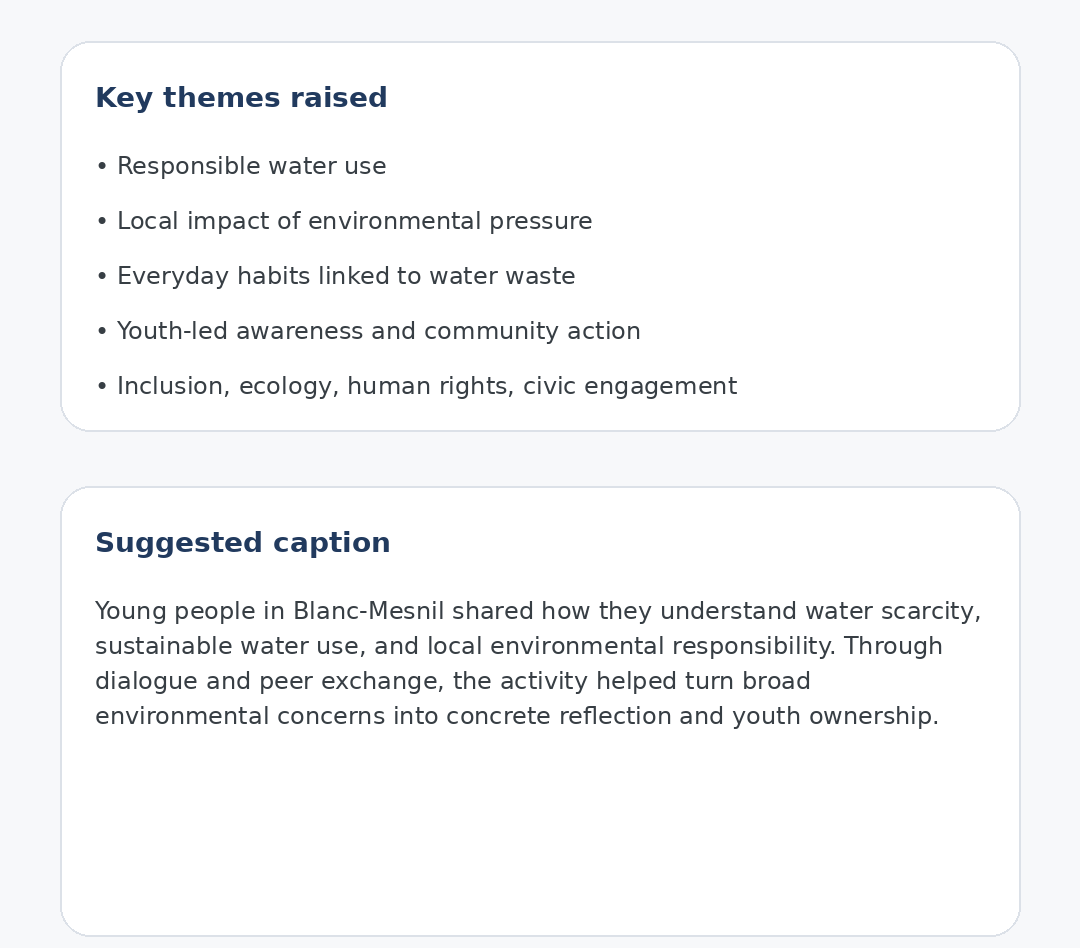
These questions helped the group move from general opinions to more concrete reflection. The discussion also made it possible to identify how young people connect environmental concerns with wider themes already present in UCA’s youth work, including activism, ecology, human rights, inclusion, and civic engagement.
This activity was also important from a youth work perspective because it served as a needs-assessment and motivation step. Our projects in the future places strong value on selecting and preparing participants who are genuinely interested in the issue, including those with fewer opportunities, and on creating space for them to express their own realities and experiences. By questioning youth locally before international activities, UCA strengthened participant ownership and ensured that the project theme was not approached only theoretically, but through real voices and lived perceptions.
-
Start
20 Feb 2026
-
End
20 Feb 2026